Clara Wolf · 28 October 2026
Exploring Query Lifecycle Stages in Educational Resource Discovery Platforms
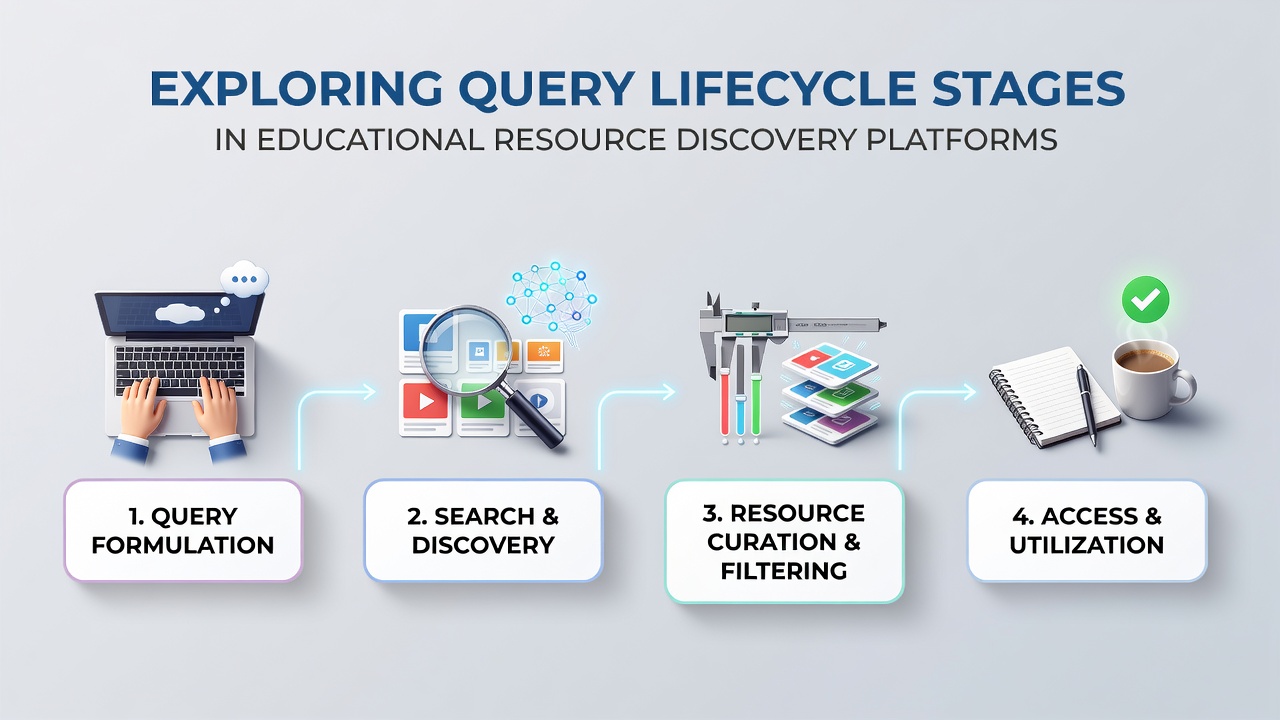
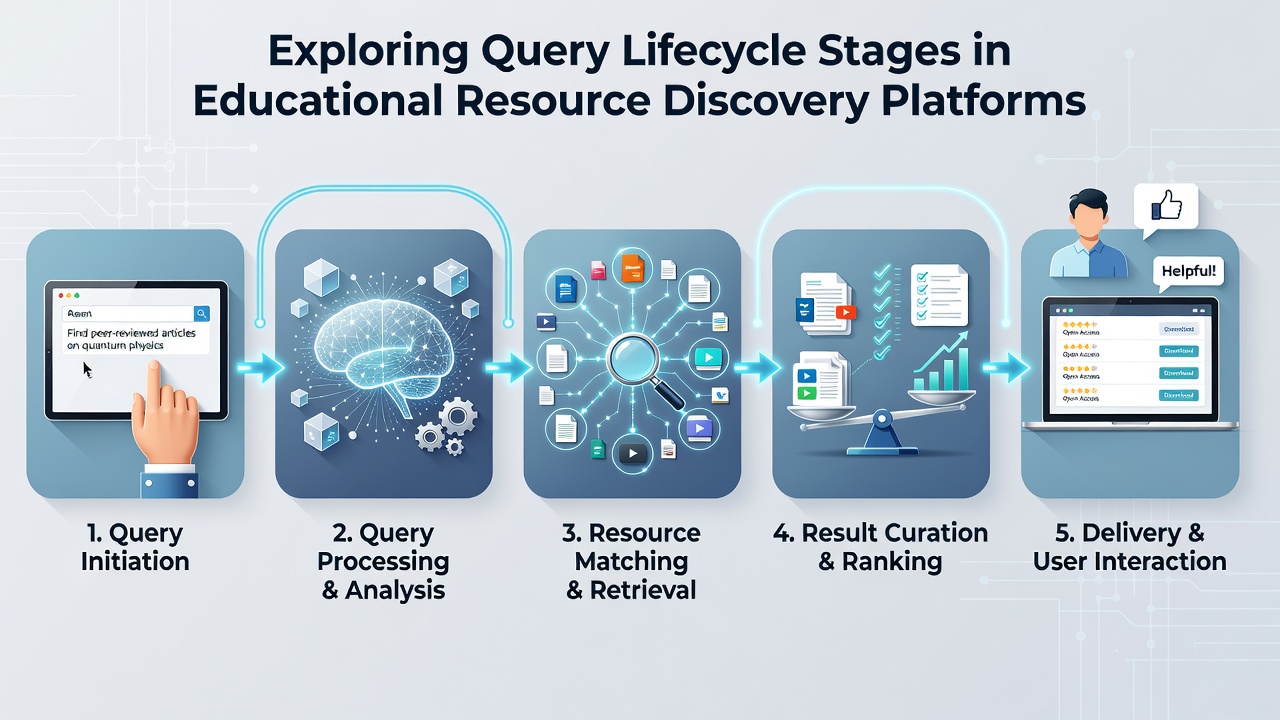
Educational resource discovery platforms manage queries through distinct stages that begin with user input and extend through processing, retrieval, and refinement cycles, while data from multiple studies tracks how each phase influences overall search outcomes in academic settings. Observers note that these platforms handle millions of searches daily across university libraries and open educational repositories, and patterns emerge when researchers examine how queries evolve at every step.
Query Formulation and Initial Input
Users start the lifecycle by entering keywords, phrases, or natural language questions into search interfaces that often include filters for subject area, resource type, or publication date, and this stage determines the foundation for everything that follows. Studies show students frequently combine broad terms with specific constraints such as grade level or language, while educators apply metadata tags to narrow results toward lesson plans or research papers. Those who examine logs from large repositories find that formulation errors, including spelling variations and ambiguous terms, appear in roughly thirty percent of sessions according to aggregated platform analytics.
Submission, Parsing, and Semantic Processing
Once submitted, the query moves into parsing systems that tokenize input, identify entities, and apply linguistic rules to expand or correct terms, and this processing phase connects directly to semantic analysis modules that map concepts across controlled vocabularies used in education. Platforms integrate thesauri and ontologies so that a search for "photosynthesis" also surfaces related items tagged under "plant biology" or "cellular respiration," while algorithms detect intent signals such as requests for videos versus datasets. Research from the OECD education indicators project indicates that semantic expansion improves recall rates by twenty-five percent in tested institutional environments, and similar gains appear in cross-border deployments tracked through 2025.
Retrieval, Matching, and Ranking Mechanisms
Retrieval engines then match processed queries against indexed collections of articles, videos, and interactive modules stored in distributed databases, and ranking algorithms weigh factors including relevance scores, usage statistics, and peer ratings to order results. Matching relies on vector embeddings and inverted indexes that allow rapid comparison across millions of records, whereas ranking incorporates machine learning models trained on historical click data. In October 2026 several major platforms introduced updated ranking layers that incorporate recency signals for curriculum-aligned materials, and early logs suggest these adjustments shifted result distributions toward recently updated open educational resources. Observers have documented that retrieval latency stays under two hundred milliseconds in optimized systems, supporting the high query volumes recorded during academic semesters.
Presentation, Interaction, and Feedback Loops
Results appear in structured interfaces that display titles, abstracts, thumbnails, and metadata previews, and users interact through clicks, saves, or downloads that feed back into the system for future refinements. Presentation layers often include faceted navigation so that learners can further filter by accessibility features or licensing terms without restarting the search. Data collected across North American and European repositories shows that approximately forty percent of sessions involve at least one refinement action, and these loops strengthen the models that power subsequent queries. Platforms record dwell time and bounce rates at this stage to adjust weighting in ranking functions, creating continuous improvement cycles documented in technical reports.
Refinement, Logging, and Long-Term Pattern Analysis
After initial results, the lifecycle extends into refinement where users modify terms or apply additional filters, and comprehensive logging captures each transition for later analysis by platform administrators and researchers. Long-term pattern studies examine how query complexity changes across academic terms or user cohorts, revealing shifts in vocabulary sophistication and topic breadth. European Commission education reports highlight that aggregated logs from member state platforms help identify gaps in available resources, guiding content acquisition priorities. Such analysis also supports compliance with data protection standards while preserving utility for improving discovery accuracy over successive cycles.
Conclusion
The stages of query lifecycle in educational resource discovery platforms form an interconnected sequence that starts with user formulation and continues through processing, retrieval, presentation, and iterative refinement, and each phase contributes measurable effects on result quality and user satisfaction. Platform operators rely on performance metrics gathered at every step to maintain efficient operations, while researchers draw on the same data streams to study evolving search behaviors in academic contexts. Continued monitoring through 2026 and beyond will likely reveal further adjustments as new indexing techniques and user interface elements integrate into existing frameworks.